

Identification and Assessment of Materiality Topics
The Company conducts a thorough review of risks and opportunities based on the expectations and concerns of all stakeholder groups. This assessment considers the impact of each operational activity within the business value chain, industry trends, sustainability direction, emerging risks, and major global shifts. The analysis adopts a holistic approach, taking into account both internal and external factors that influence economic, social, environmental, and human rights aspects—both in terms of their impact on the Company and on stakeholders. This process follows the principles of the Global Reporting Initiative Standards (GRI Standards) and aligns with the Sustainable Development Goals (SDGs) . The Company prioritizes sustainability issues through a structured sustainability management framework, which includes: identifying key issues and impact scope, evaluating and prioritizing materiality topics, validating material topics, communicating and reporting on material sustainability issues. The preliminary material topics are reviewed by senior executives from the Sustainablility Development Working Group and the Corporate Governance and Sustainable Development Committee before final approval by the Board of Directors. The sustainability materiality assessment follows the process and steps as outlined below:
Sustainability Management Development Guideline
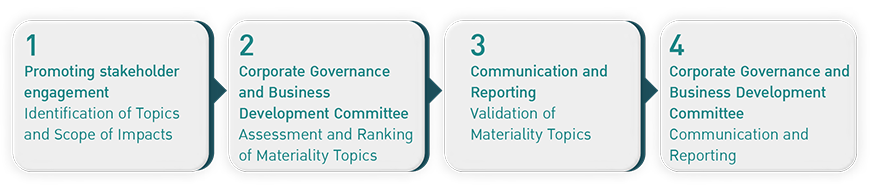
Identification of Topics and Scope of Impacts
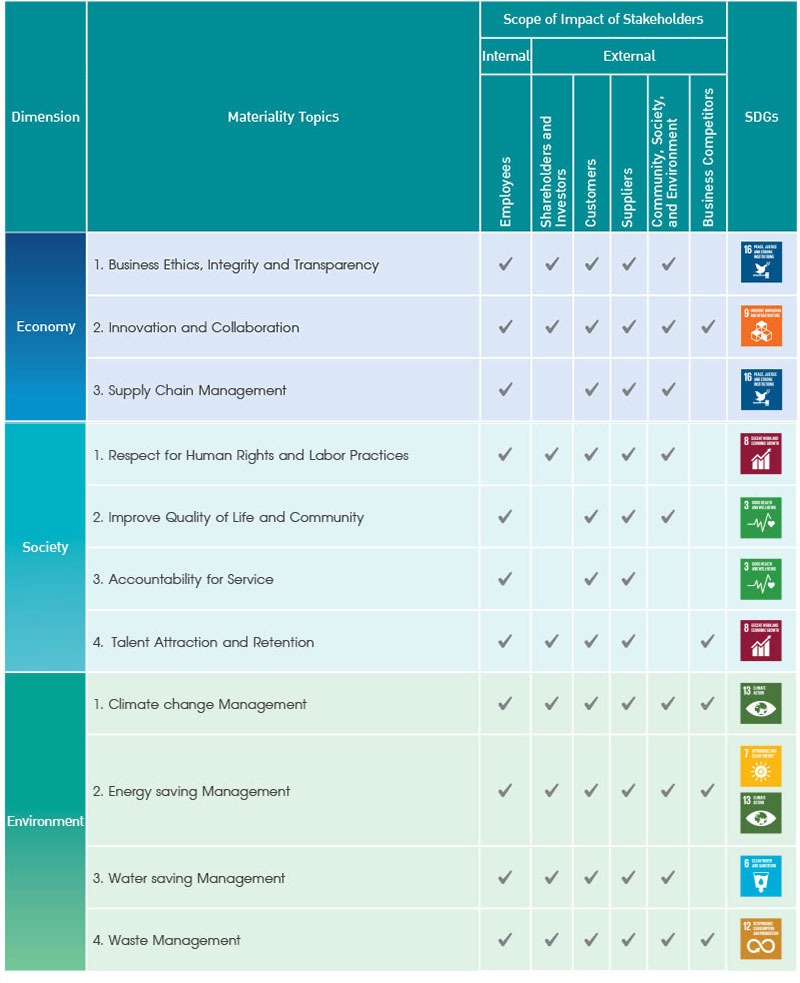
The Company identifies key issues that may have both positive and negative impacts on value creation across the entire business value chain. This assessment considers both internal and external contexts, including industry trends, evolving consumer behavior, economic conditions, technological advancements, environmental factors, political and legal regulations affecting all stakeholder groups. Additionally, the Company evaluates the relevance of these issues to its business objectives and sustainable development goals, ensuring comprehensive coverage of economic, social, and environmental dimensions throughout the business value chain. This is carried out alongside an assessment of the scope of impact on all stakeholder groups, as outlined below.
| Economic Dimension (G) | Topic Description |
|---|---|
| G1 Business Ethics, Integrity and Transparency |
A good corporate governance structure and system represents internal control mechanisms that lead to fairness and transparency and the role of the board of directors as leaders in taking the organization toward success with consideration to the interest of shareholders and stakeholder responsibility. |
| G2 Innovation & Collaboration with Technology |
Development of the Company’s innovations to reflect the effort to enhance business competitiveness in the midst of economic, social, and environmental changes in order to meet the needs of stakeholders while creating value for business and society. |
| G3 Supply Chain Management |
Manage the supply chain sustainably to reflect the effectiveness, transparency and engagement with trade partners in the supply chain from trade partner selection to procurement and trade partner evaluation to encourage trade partners to follow the Company’s business sustainability guidelines. |
| Social Dimension (S) | Topic Description |
|---|---|
| S1 Respect for Human Rights and Labor Treatment |
Because business operations involve many groups of stakeholders that might impact the quality of life and basic rights of humans, fair treatment of stakeholders starts with developing knowledge and a positive attitude in operating business without violating human rights. Treating employees fairly from hiring to termination of employment demonstrates attentiveness and effort in promoting employee engagement in the organization while reducing risks of labor disputes. |
| S2 Improving Quality of Life for Community and Society |
Taking responsibility for communities and society demonstrates the effort to prevent impacts on communities and society from business. In addition, continuous participation in community and social development demonstrates the attempt to sustainably increase the quality of life of people in society. |
| S3 Accountability for Service |
Being accountable to customers and service recipients demonstrates our effort to deliver services that enhance satisfaction promote trust in our customers. |
| S4 Talent Attraction and Retention |
This means being responsible for personnel and the treatment of personnel by enhancing the capabilities of talented employees by increasing employee knowledge and ability in different areas in addition to creating the incentives to promote employee engagement in the organization. |
| Environmental Dimension (E) | Topic Description |
|---|---|
| E1 Climate Change Management |
Greenhouse gas is a climate change problem, since it contributes to heat in the atmosphere and climate change. Consistent efforts to control and reduce greenhouse gas emissions can help alleviate problems and the severity of climate change and natural disasters that affect business activities. |
| E2 Energy Saving Management |
Making worthwhile use of electricity, water, fuel, and other energy reflects effective cost management and demonstrates the effort to reduce dependency on finite energy or fossil fuels. |
| E3 Water Saving Management |
Procuring and using water in a worthwhile manner reflects cost management in business processes and reduces risk of water shortages. |
| E4 Waste Management |
Efforts to reduce trash and waste from business activities demonstrate the ability to make worthwhile use of resources while reducing negative impacts from business processes that might disturb communities and society. |
Assessment and Ranking of Materiality Topics
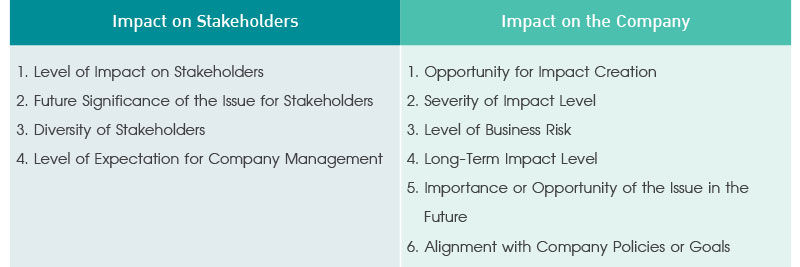
The Company prioritizes materiality topics by assessing the significance of economic, social, human rights, and environmental impacts on the organizational context and stakeholders. This assessment covers the scope of challenges, opportunities, strategies, and sustainability goals. All identified issues are ranked based on opportunities and risks, evaluated by their significant impact and likelihood in relation to the Company’s business and stakeholder concerns. This process aligns with indicators from the Global Reporting Initiative Standards (GRI Standards) and the United Nations' Sustainable Development Goals (SDGs) using the following criteria:
Changes to the Reporting of Sustainability Materiality Topics
The Company has developed a process for evaluating key sustainability issues by formulating appropriate policies, strategies, and sustainability plans. The prioritization criteria consider both stakeholder perspectives and the impact on the Company. Issues are categorized into three levels: low, medium, and high, ensuring greater clarity in identifying key sustainability issues. In the year 2024, the same 11 materiality topics remain unchanged.
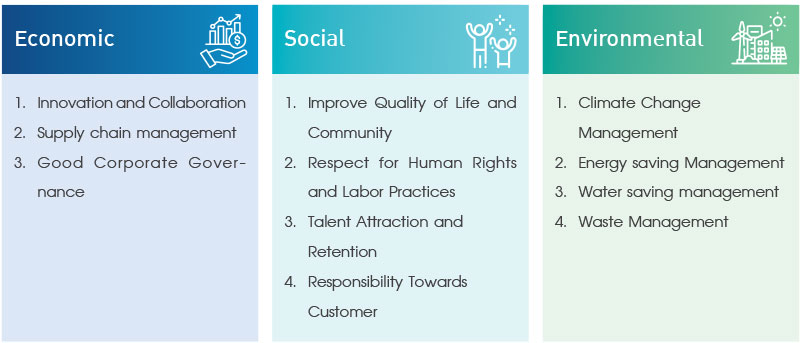

For the materiality topics of Praram 9 Hospital, priorities and action plans are determined, along with an analysis of both the positive and negative impacts of these key issues on the business. This includes considerations related to expenses, revenue, risks, and opportunities for business growth at Praram 9 Hospital. The analysis of materiality topics—Impact and Materiality Topics Analysis—enables a clear identification of opportunities and risks, as well as the development of appropriate action plans to promote sustainability while minimizing environmental and social impacts, as outlined below.
Impact and Material Topic Analysis

Validation of Materiality Topics
The Corporate Governance and Sustainablility Development Committee reviews information from stakeholder representatives, as well as laws, customer requirements, stakeholder engagement, and sustainability contexts across economic, social, human rights, and environmental dimensions. This includes assessing risks and opportunities that may impact stakeholders. Sustainability issues that are significant to the business strategy are presented to the Board of Directors for validation of material topics, ensuring accuracy, appropriateness, and approval in alignment with the sustainable development policy and evolving business contexts.

Communication and Reporting
The Company manages approved material sustainability issues through corporate strategic planning, goal setting, and resource allocation, covering short-term, medium-term, and long-term plans. Additionally, the Company discloses operational information to stakeholders through channels such as the annual report (Form 56-1 One Report) or the Praram 9 Hospital website, ensuring continuous annual updates. Stakeholders can provide expectations, concerns, and feedback on the annual report through designated channels for each stakeholder group. This input supports the development of material sustainability issues and enables the Company to appropriately respond to stakeholder expectations on each issue.