
Social Policies and Practices
Currently, the Company is committed to conducting business that brings about positive changes to society. The goal is to create sustainable well-being in the context of the social dimension, with a balanced approach as the organization's main mission in healthcare and improving the quality of life for people. The Company has implemented this through four key areas, which include respect for human rights and labor practices, responsibility towards personnel, responsibility towards customers, and involvement in improving the quality of life for communities
In addition, the Company places importance on promoting values from within the organization to the outside. This includes developing employees' knowledge and work skills, fostering a culture of safety, taking care of employee health, creating career advancement paths, and building employee engagement. These efforts have led to the Hospital's ability to enhance service delivery and achieve excellence in various services, including the development of specialized medical centers, digital healthcare services, and improving the quality of life for vulnerable groups in society. The Company also focuses on the development of healthcare service innovations, sharing knowledge and health experiences to elevate the quality of life in society, leading to better living conditions. This is all part of driving the business towards sustainability by creating shared value between the organization and its stakeholders through the formulation of strategies and operational practices that align with stakeholder expectations as follows:

Respecting for Human Rights and Labor Practice

The Company prioritizes respecting and promoting human rights as an important aspect of its business operations. This is because conducting business inevitably involves human interaction both directly and indirectly within the value chain of the business. Each process requires human labor for its operations. Therefore, The Company promotes equitable practices based on human rights principles for employees, partners, customers, and other stakeholders, as well as ensuring workplace safety, creating meaningful jobs, and fostering a positive working environment. These factors are crucial as they can impact business operations and the organization's image. Additionally, The Company promotes well-being and ensures access to adequate basic income, as well as focusing on vulnerable groups in society to reduce social "inequality" between the "privileged" and the "underprivileged." This fosters values of equality and supports vulnerable groups in having a better quality of life by creating meaningful jobs that allow them to be self-sufficient and not become a burden on society in the future.
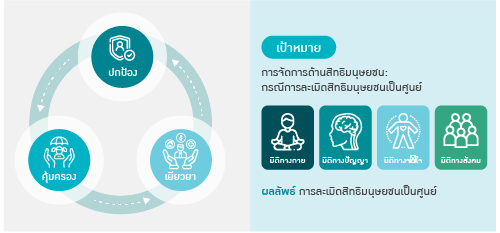
The Company has established policies and practices to ensure that its business activities do not violate human rights throughout the entire value chain. This is done in accordance with the Universal Declaration of Human Rights (UDHR), with the expectation that employees at all levels adhere strictly to these principles. The operational approach begins with
- Ensuring Respect for Human Rights Principles and treating others with equality, without discrimination, regardless of differences in race, skin color, gender, age, language, religion, mental status, disability or impairment, social status, political views, or marital status, etc.
- Providing Protection by offering employees or stakeholders affected by human rights violations the opportunity to express their opinions or file complaints about unfair treatment or improper actions within the Company. The Company has established processes and accessible channels for receiving complaints both online and offline, available 24/7, including the Contact Center phone line (1270), a complaint/suggestion box, and forwarding information to the responsible departments. There are also measures in place to protect individuals who report or provide feedback in a fair and appropriate manner.
- Remediation In the event that the Company's operations result in human rights violations, the Company will establish measures for remediation
- The development, correction, and reporting to the Executive Committee for consideration of assistance and appropriate remediation for individuals affected by human rights violations.
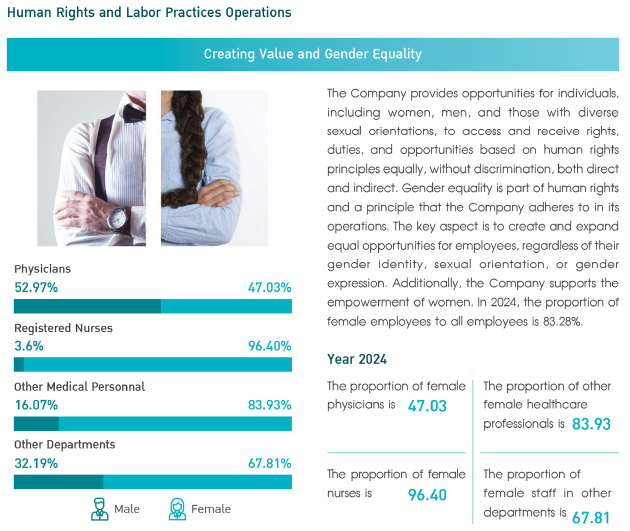


In 2024, based on the comprehensive Human Rights Due Diligence (HRDD) assessment, it was found that the Company has no human rights risks. However, even though the Company has no human rights risks, the Company has established a policy and mechanism for remediation or compensation for any impacts caused by human rights violations. In the event of any risk or impact arises, the Company will closely monitor the impact and communicate publicly to ensure that those affected will receive appropriate care and remediation. The following are the steps for implementing remediation:
- The Hospital executives will provide initial assistance.
- The Risk Management Department will investigate the facts regarding the individuals involved and present the findings at a meeting of the Ethics Committee (Praram 9 Hospital), which consists of top management from all departments and the Hospital's legal advisors, to consider the assistance and conclude the appropriate remediation measures.
- Present to the Board of Directors for consideration and approval of the risk management actions related to human rights matters.
Performance Monitoring and Reporting
The Company conducts regular monitoring of human rights performance and provides continuous communication, education, and training for employees on human rights matters to raise awareness. This is to prevent issues that may pose a risk of negative impacts through the Company's activities and business relationships. The performance results for 2024 are as follows:
- The Company has conducted a 100% assessment of human rights risks and impacts.
- The Company has implemented measures to reduce impacts and a remediation process for human rights risks at a rate of 100%.

Human Rights and Labor Practice Performance
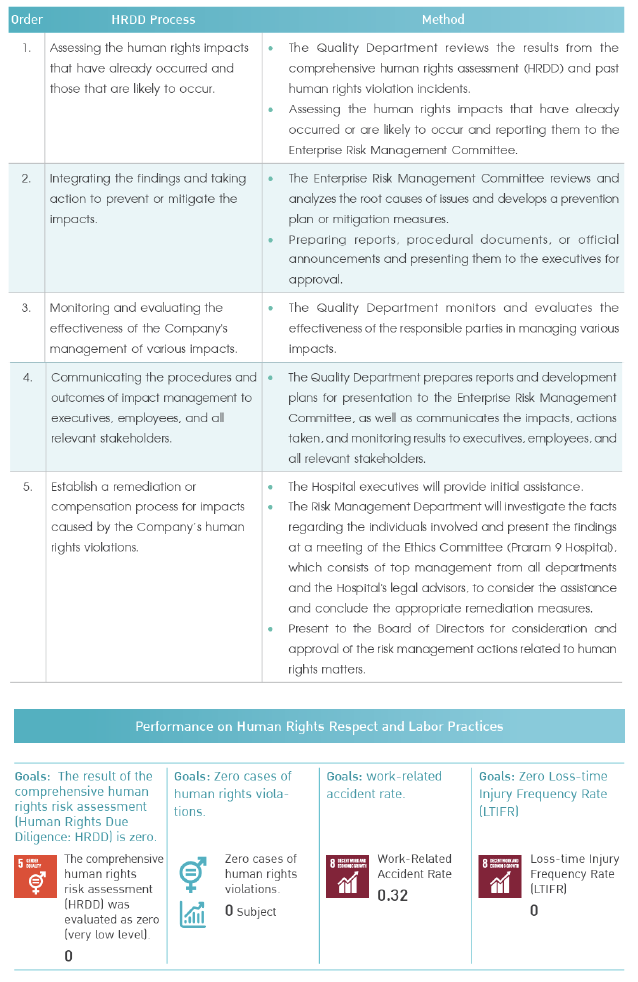
The Company consistently promotes the respect for human rights and labor practices throughout the value chain, resulting in no human rights violations from the Company’s operations in 2024. As a result of the comprehensive human rights risk assessment (Human Rights Due Diligence: HRDD), the risk was assessed as zero.
The work-related accident rate was 0.32, with 5 occurrences, which is considered to be at a low and non-severe level. The Company remains committed to investigating the causes and implementing policies to prevent accidents rigorously, aiming to reduce the work-related accident rate to zero in the future.
Human Rights and Labor Practices Operations

Management of Human Resource Responsibility
The Company emphasizes human resource management and employee engagement to drive organizational success. A variety of tools are employed, including human resource development, fostering a safe and equitable work environment free from discrimination, and embracing diversity regardless of race or ethnic background. Simultaneously, the Company focuses on attracting and retaining high-potential employees while monitoring effectiveness through employee satisfaction indicators to improve and enhance management systems. Additionally, workforce analytics are utilized to plan personnel responsibilities and assess areas where further skill development is required. The Company adheres to labor laws and international labor standards to support fair and transparent recruitment, employment, and promotion processes, leading to enhanced employee enagagement. Attracting and retaining high-potential employees is also a key factor in sustaining organizational growth. To further support employee well-being, the Company has established a Labor Welfare Committee and an Occupational Health and Safety Committee to foster positive employer-employee relations. Moreover, efforts are made to improve employees’ quality of work life by providing opportunities for growth and development through various programs, ensuring that employees feel valued and recognize the significance of their contributions to the organization.

In 2024, the Company supported the development of AI by providing training for employees to enhance their skills in new technologies, such as leveraging AI to improve operational efficiency. This not only ensures that employees acquire up-to-date skills but also fosters innovation within the organization, creating enhanced customer experiences and generating new value through technology. Innovation is further applied to developing service processes that are secure, fast, and convenient. Additionally, employee behavior is aligned with the corporate culture by enhancing reskilling and upskilling across both soft skills and hard skills to refine or transform business processes and drive innovation in products and services, including:
Developing Leadership and Establishing a Clear Career Path
Goal: Average training hours of no less than 30 hours per employee per year.
Promoting Workplace Safety, Occupational Health, and Environment
Goal : Zero work-related accident and illness rate.
Enhancing Quality of Life and Well-Being, Strengthening Employee Engagement, Motivation, and Retention of Talent
Goal : Responsibility for Human Resources includes:
- Employee engagement rate of no less than 80%
- Overall employee turnover rate reduced to less than 9%
- Turnover rate of high performance kept below 4%
The outcomes of employee capacity development and engagement initiatives have led to the promotion of certain employee groups based on post-training performance evaluations. Additionally, the Company's efforts to reduce employee turnover have resulted in improved retention of high-quality employees, ensuring that the benefits of training and development continue to contribute to the Company's growth. These achievements have been realized through various programs
Human Resource Responsibility Performance
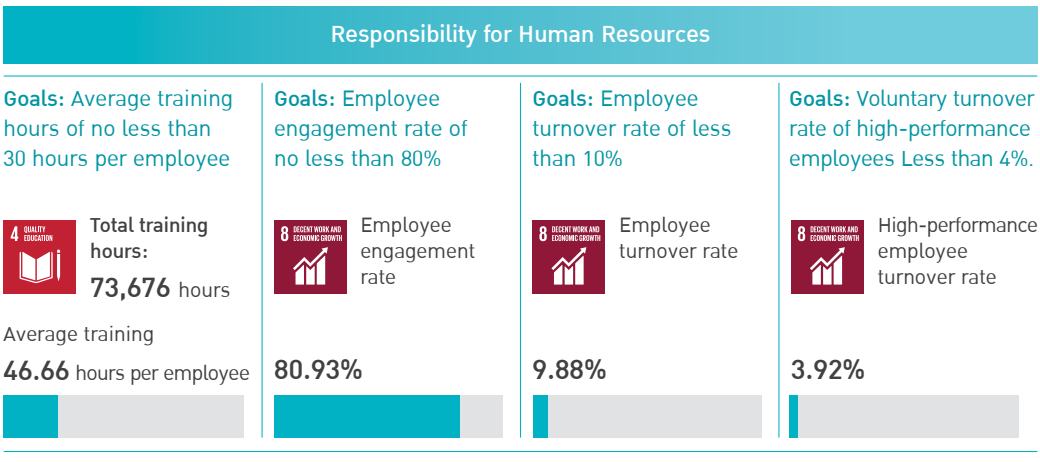
The Company promotes learning opportunities for the development of personnel skills and is committed to enhancing quality of life and well-being, fostering engagement, motivation, and retaining talented employees. Accordingly, in 2024, the assessment results are as follows:
- Total training hours for development:73,676 hours, with an average training time of 47.81 hours per person, a decrease from 2023 by 10%.
- Employee engagement rate: 80.93%, an increase of 24.7% from 2023 (81.1% in 2023).
- Employee turnover rate: 6.41%, a decrease of 33.22% from 2023.
- Voluntary turnover rate of high-performance employees: 3.92%, a decrease of 6.6% from 2023.
Human Resource Responsibility Performance


Patient Quality and Safety
Praram 9 Hospital prioritizes patient safety and treatment quality by adhering to international healthcare standards. Its operational approach focuses on the continuous improvement of patient safety measures. Patient Safety is one of the core principles, encompassing various protocols to ensure that patients receive safe and effective treatment. Service quality within the Hospital is another critical focus, ensuring that patients receive the highest level of care. Ongoing improvements and developments across various aspects contribute to patient satisfaction and reinforce confidence in the services provided. The key elements of service quality and patient safety include:
1. Clinical Competence
- High-quality care from physicians, nurses, and medical teams with expertise and experience in patient treatment.
- Effective and safe treatments following international standards.
2. Accessibility
- Accessible services, including appointment scheduling, emergency treatments, and a variety of healthcare options.
- Process improvements to ensure patients receive timely care with minimal waiting time.
3. Patient-Centered Care
- Patient-centered services, understanding individual health concerns and providing appropriate consultations.
- Compassionate and empathetic care, ensuring patients participate in treatment decisions.
4. Effective Communication
- Clear and transparent communication regarding diagnoses, treatments, and medical test results.
- Providing understandable information to help patients and their families make informed decisions.
5. Safety Standards
- Strict adherence to patient safety standards, including medication verification and proper procedural checks.
- Utilizing technology to support treatment and minimize risks, such as medical equipment tracking and electronic medical records.
6. Resource Management
- Efficient resource management, including hospital bed allocation, medical equipment usage, and staff deployment.
- Strategic planning and readiness to meet patient service demands.
7. Continuous Monitoring and Improvement
- Continuous monitoring of service quality through both internal and external evaluations, including accreditation by internationally recognized organizations.
- Quality improvement initiatives utilizing assessment results to enhance service efficiency.
8. Patient Satisfaction
- Evaluation of patient satisfaction, gathering feedback and suggestions regarding received services.
- Implementing corrective actions based on feedback to enhance the patient service experience.
9. Technology and Innovation
- Integration of technology and innovation in patient care, such as electronic health records (EHR) and the use of AI for health data analysis.
- Advancing medical technology in treatments, including robotic surgery and high-precision therapeutic methods.
- Enhancing hospital service quality requires a combination of high-quality medical services, patient satisfaction, and adherence to international standards, ensuring optimal patient care in all aspects.
Responding to Service Users' Needs
The Company prioritizes consumer satisfaction, as satisfaction is a crucial factor in developing and improving service quality. Regular surveys, monitoring, and inquiries are conducted to understand the needs of both current service users and those who reach out through various online channels. This feedback is then utilized to enhance services and better meet customer expectations.
The Company has set a goal for managing responsibility to service users, aiming for a service user satisfaction rate of at least 95% in Patient Experience. It has set a goal of
1. Outpatient Experience Satisfaction Rate (OPD) Not less than 95% Based on the 2023 annual survey, the outpatient experience satisfaction rate (OPD) was = 92.12%. In response to the survey results, various initiatives have been implemented to meet service users' needs, as follows:
- Developed an Application Notification to Alert OPD staff when a physician has completed a consultation, ensuring that patient names are promptly sent to the pharmacy and billing department. This reduces the risk of prolonged waiting times for service users.
- Developed an Application for verifying healthcare benefits, enabling clear, fast, and efficient communication to service users regarding their entitlements.
- Implemented a QR Code system for patient self-care instructions in every consultation room. Each department has a designated 9 Code specific to its specialty, ensuring that service users can easily access relevant self-care guidelines.
- To facilitate patient navigation between the two buildings, additional signage has been installed to clearly indicate key locations and pathways. Additionally, an electric shuttle service is available to transport patients between the buildings, minimizing confusion and enhancing convenience.
- For international patients receiving medical services, the Hospital has assigned a sufficient number of interpreters to provide close assistance and reduce language barriers that may impact the quality of patient care and overall service experience. Miscommunication can lead to misunderstandings in treatment, difficulties in providing medical information, or even a lack of trust between patients and healthcare professionals.
- Established the Service Transform Committee to enhance and develop service behavior among staff and to plan strategic service improvements. The committee is committed to systematically implementing all recommendations to continuously refine service quality.
- Efforts have been made to curate suitable retail and dining options that align with the needs of service users.
2. Inpatient Experience Satisfaction Rate (IPD) not less than 95% Based on the 2023 annual survey, the inpatient experience satisfaction rate (IPD) was = 97.08%. In response to the survey results, various initiatives have been implemented to meet service users' needs, including the following:
- A comprehensive Learning Center was established on the 8th floor to provide professional training, with a primary focus on onboarding new nurses. The center includes E-training modules on intravenous line placement and fluid administration, utilizing advanced simulation mannequins. Additionally, hands-on training is provided for various nursing procedures using state-of-the-art mannequins capable of simulating real-life medical scenarios.
- For international patients, interpreters are assigned to provide close assistance to minimize language barriers that may affect the quality of patient care and overall service experience. Miscommunication can lead to misunderstandings in treatment, difficulties in providing medical information, or even a lack of trust between patients and healthcare professionals.
- For patients who require long-term hospitalization and need controlled food compositions under the supervision of dietitians, a common issue is loss of appetite. To address this, a meal plan has been implemented with a one-month rotating menu to ensure variety and prevent repetition, enhancing dietary diversity for better patient satisfaction.
- Improvements and adjustments have been made to the Smart TV system and WIFI signal to enhance speed and ensure sufficient connectivity for user needs.
Implementation
For service experience evaluation (Patient Experience) and individual satisfaction surveys, customer relations officers directly engage with service users to gather feedback on their experiences. In cases of commendations or suggestions, the officers record the information into the Program Risk Management system and issue a task report to the relevant departments. This process ensures that necessary corrective measures are taken to prevent recurrence and allows for concrete responses to meet service users' needs effectively.
Facility Improvements to Enhance Service User Experience :
- OPD - 2nd Floor, Building A, Emergency Room, Internal Medicine Department, Orthopedic Surgery Department. These improvements aim to accommodate the increasing number of outpatients.
- IPD - 10th Floor, Building A Renovated to enhance the environment for accommodating inpatients.
- 8th Floor, Building A Established as the Praram 9 Hospital Learning Center to provide academic training for the Company's personnel.
Accountability for Service Performance

In addition to assessing overall satisfaction, the Company also evaluates the rate of returning customers. If service users have a positive perception of the Company's services, it fosters trust and encourages repeat visits. Moreover, tracking the return rate of existing customers not only measures satisfaction but also reflects confidence in the services provided and a positive attitude toward the Company. Maintaining high customer satisfaction and delivering an excellent service experience increases the likelihood of strengthening customer trust and encouraging referrals to others.
- Recommendation Score for Service Use - Outpatient Satisfaction: 98.25%
- Recommendation Score for Service Use - Inpatient Satisfaction: 98.05%
Service User Complaint Management
Effective complaint management is a crucial aspect of customer service, ensuring satisfaction and maintaining customer trust. The Company has implemented an efficient complaint management process as follows:
Effective complaint management is a crucial aspect of service quality improvement and development. Listening to and addressing customer complaints efficiently not only resolves issues but also provides an opportunity to build stronger relationships with customers and enhance service satisfaction. A well-structured complaint management system can transform challenges into opportunities for service enhancement and refinement. To ensure customer satisfaction and maintain trust, the Company has implemented an effective complaint management process, as outlined below:
- Complaint Reception: Receiving customer complaints through all available service channels. Currently, the Company has developed multiple reporting systems, including telephone, QR Code, email, Line, and social media platforms, ensuring convenient communication for customers.

- Listening and Acknowledging: When service users raise complaints, it is crucial to listen attentively and empathetically, making them feel that their concerns are valued and taken seriously.
- A thorough analysis and investigation of the issues are conducted to determine the root cause, whether it is related to service delays, treatment quality, or procedural inconveniences.
- Rapid response and resolution of issues are prioritized, along with transparent and direct communication. Upon receiving a complaint, staff members promptly acknowledge and respond to the service user, even if the issue has not yet been fully resolved. Demonstrating concern and recognition of the complaint is essential in maintaining trust and service quality.
- Follow-up and Summary: Monitoring each case to ensure complaints are properly managed, along with compiling a summary of complaint resolutions.
- Learning and Improvement: Utilizing complaint data to enhance future services by refining work processes or providing staff training to prevent recurring issues.
- Providing a clear explanation of the issue and offering a sincere apology to affected service users, demonstrating the Company's awareness and commitment to resolution.
- Implementing promised solutions such as service modifications, additional services, or providing valuable recommendations.
- Post-resolution follow-up to ensure the issue has been fully addressed and that the service user is satisfied with the outcome.
- Record-Keeping: Maintaining detailed records of all complaints received, including complainant details, issue descriptions, and timestamps.
- Analysis and Evaluation: Conducting a thorough analysis to identify root causes before implementing corrective actions.
- Utilizing complaints as a tool for service quality improvement is essential, as they provide valuable insights for refining service systems and processes. Complaints serve as key data points for future service enhancements, such as optimizing service procedures, improving staff training, or integrating technology to enhance efficiency.
- Fostering a culture of responsiveness and encouraging personnel to actively listen and recognize the importance of complaint management is a fundamental part of service quality improvement and development.
Managing customer complaints is not just a process for problem resolution but also a demonstration of responsibility and commitment to providing attentive and efficient customer care. When handled properly and with attention to detail, it can enhance customer satisfaction, improve service quality, and foster long-term relationships with service users.
Outcome: Complaints regarding customer privacy violations: = 0 cases.
Operations in Responsibility to Service User
- Ensuring the security of digital medical systems in compliance with ETDA standards.
- Enhancing organizational data storage on Cloud.
- Providing high-quality healthcare with strong safety standards and ethical practices.
- Ensuring patient satisfaction and delivering excellent service.
- Providing clear, accurate, fast, and convenient health information.
- Offering reasonable medical service fees.
- Data Privacy & Security - Confidentiality and safety of patient records and treatment information.
Responsibility to Service is a key factor in building confidence among service users and fostering trust. It also directly contributes to maintaining service standards and ensuring long-term customer satisfaction.
1. Service Quality Maintenance
- Maintaining Quality Standards:Compliance with established service standards, such as JCI (Joint Commission International) accreditation for hospitals, ensuring consistent and predictable healthcare services.
- Monitoring and Evaluation:Internal and external assessments to regularly monitor service quality, including audits and quality assurance programs, to improve efficiency and responsiveness to patient needs.
2. Responsibility for Service User Safety
- Accident and Hazard Prevention:Implementing measures to prevent and reduce risks in service delivery, such as treatment outcome monitoring, medication safety checks, and hospital infection control.
- Safety Training:Training staff on safety protocols and accident prevention to ensure adherence to appropriate safety measures within the work environment.
3. Providing Transparent and Accurate Information
- Providing Easy-to-Understand Information: Providing transparent and easy-to-understand information about services, medical costs, and procedures, including treatment guidance and cost details.
- Responding to Questions and Concerns: Service users should receive complete and accurate information, along with clear guidance and answers to any inquiries.
4. Fair and Equitable Service
- Fair Treatment: Services should be provided without discrimination based on race, religion, or socioeconomic status.
- Equal Access to Services: Ensuring equal care for all individuals without any form of discrimination is essential in building trust and confidence among service users.
5. Ethical Practices
- Confidentiality and Privacy Protection: Respecting the right to confidentiality of service users’ personal information, such as medical records or personal data, is crucial, especially in the healthcare sector.
- Maintaining Ethical Standards in Service Delivery: All personnel should adhere to ethical service standards, ensuring honesty, transparency, and accountability to customers.
6. Listening and Responding to Complaints
- Taking Complaints Seriously: The organization must have clear channels for receiving complaints from service users and respond promptly to resolve issues or errors.
- Evaluation and Improvement: Complaints should be used as valuable feedback for improving services, such as enhancing workflow processes or increasing staff training to ensure higher service quality.
7. Personnel Development
- Training and Skill Development: Enhancing staff skills in customer service and professional expertise, such as communication training and delivering friendly, easy-to-understand service.
- Strengthening Awareness of Responsibility: Educating personnel on the importance of responsibility towards customers and the best practices for delivering high-quality service.
8. Service User Care and Satisfaction Enhancement
- Providing Services that Meet Customer Needs: Gaining a deep understanding of service users’ needs, such as improving services based on feedback and recommendations from users.
- Post-Service Care:Following up with service users via phone calls after treatment or service to assess satisfaction and outcomes.
Ensuring responsibility towards service users builds confidence by demonstrating that the organization prioritizes and carefully oversees every aspect of its operations. This includes delivering high-quality services, maintaining safety, providing transparent information, and addressing complaints effectively. A strong commitment to responsibility and attention to detail enhances customer satisfaction and fosters long-term trust between service users and the organization.
Stakeholder Engagement Channels
- Communication and consultation through offline and online platforms (Website, Facebook, Line, Twitter), as well as the contact number for Call Center: 1270.
- Continuous service satisfaction surveys conducted through questionnaires and various electronic channels throughout the year.
- Public relations activities and health education initiatives.
- Providing health education training within the Hospital.
Stakeholder Response Strategies

Social Impact Assessment
The Company has conducted a Social Impact Assessment based on key stakeholders' concerns, addressing current and future negative impacts. It has identified social outcome measurement and applied the Social Return on Investment (SROI) methodology to develop sustainability strategies, action plans, and key performance indicators to mitigate negative impacts. This initiative aims to contribute to improving the quality of life within society. In 2024, the Company implemented Creating Shared Value (CSV) initiatives, carrying out 2 projects as follows:
1. HAPPY KIDNEY: Healthy Kidneys, Happy Life (Activity: "New Kidney, New Life")
Praram 9 Hospital is a leader in providing medical services with a focus on holistic and sustainable healthcare. It is also the private hospital with the most expertise in kidney transplant surgeries in Thailand. The Hospital’s Kidney and Kidney Transplant Institute has performed over 1,367 cases, which have been highly successful. Patients who undergo the surgery are able to return to a normal life and experience an improved quality of life. With expertise in kidney disease treatment, the hospital has developed the "New Kidney, New Life" program, which is part of the Creating Shared Value (CSV) concept. The program aims to create a positive social impact through quality medical services that focus on promoting health and improving the quality of life for kidney disease patients. This includes providing education and understanding about kidney disease, kidney transplantation, pre-and post-transplant patient care, and appropriate treatment methods for medical professionals and the general public. The Hospital has partnered with the "Kao Than Roke Foundation" and hospital network partners to expand access to medical services and help improve the quality of life for kidney disease patients.
Objectives
Business Objectives:
- Increase the number of patients who can access quality kidney disease treatment.
- Enhance the Hospital's credibility and image as a leader in kidney disease treatment.
- Increase revenue from providing comprehensive kidney disease treatment services.
Social Objectives:
- Provide education about kidney disease and preventive measures to the public.
- Reduce the incidence of complications in chronic kidney disease patients.
- Support access to standardized treatment for all kidney patients.
Strategies and Implementation Plan
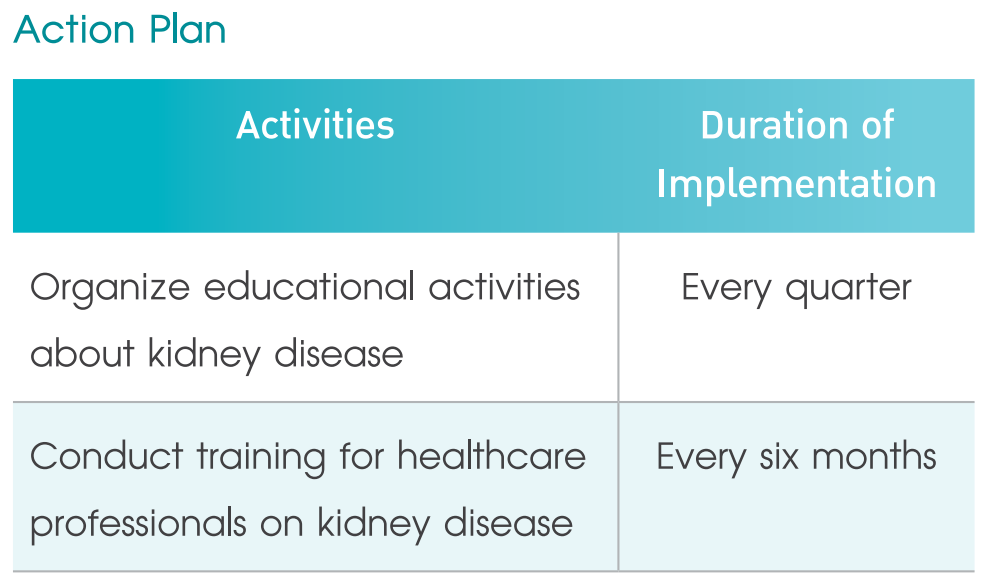
- Development of Accessible Medical Services - Expand the kidney disease screening program in communities.
- Building Collaborative Networks - Collaborate with a network of partner hospitals to provide knowledge support.
Key Performance Indicators - KPIs
Business Indicators:
- Number of patients receiving treatment.
- Revenue from kidney disease treatment services.
Social Indicators:
- Organize educational activities about kidney disease
- Satisfaction of participants in the program
Operations
In 2024, the Program has carried out various activities, including organizing seminars to provide kidney-related knowledge to healthcare professionals, conducting seminars for kidney disease patients and the general public, visiting patients in the field, and expanding collaborative networks. In total, 8 sessions were held as follows:
- Seminar project on kidney disease and kidney transplantation for professional nurses in Trang Province on 23 February 2024.
- Seminar project on New Kidney, New Life in collaboration with Thonburi Thungsong Hospital to educate the public on 3 March 2024.
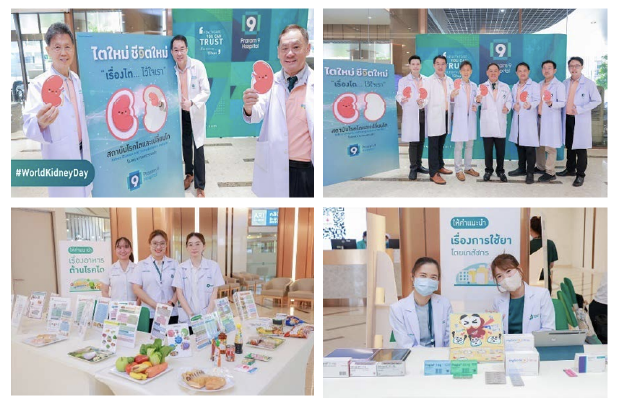
- World Kidney Day activity to educate the public at Praram 9 Hospital on 13 March 2024.
- Site-visit for the specialized nursing course in dialysis replacement therapy at Rangsit University on 30 April 2024.
- Site-visit from Sirivej Hospital Chanthaburi on 20 June 2024.
- Educational Seminar for Professional Nurses Caring for Kidney Disease Patients at Ubonrak Thonburi Hospital on 19 September 2024.
- Site-visit for the specialized nursing course in dialysis replacement therapy at Rangsit University on 25 October 2024.
- Seminar on holistic care for chronic kidney disease patients at the Samut Prakan Provincial Health Office on 13 December 2024.
Social Impact Assessment - SIA
Key Stakeholders
- Kidney disease patients and their families - have received the opportunity for treatment, gained knowledge and understanding about kidney disease, self-care, and treatment approaches, as well as easy access to medical services.
- Healthcare professionals - have the opportunity to develop expertise and service delivery efficiency, gaining knowledge and understanding about kidney disease, treatment, and kidney transplantation, as well as enhancing their expertise in caring for kidney disease patients.
- Partner hospitals and the public sector - help reduce the public health burden and improve the quality of life for the population.
- Praram 9 Hospital: is a center for kidney disease treatment and kidney transplantation that fosters collaboration with networks to develop the quality of medical services, promote social business practices, build the organization's image, and ensure sustainability for the organization.
Occured Social Impact
Positive impact:
- Patients receive accurate knowledge about kidney disease to make informed treatment decisions
- Promote effective prevention and treatment
- Reduce the incidence of complications
- Improved quality of life after treatment
- Reduce the long-term care burden on families
Negative impact:
- The cost burden of treatment
- Concerns about decision-making
- Limitations in hospital personnel and resources
- Potential Future Impacts
- The increased demand for treatment may place a burden on the public health system
- Resource management, such as budgeting and personnel, must be appropriately planned
Measuring Social Outcomes and Evaluating Social Return on Investment - SROI
Calculating SROI will consider the income generated from treatment and kidney transplantation as well as the social impact that has occurred.
- Total Value of Outcomes
= Revenue from kidney transplant surgery + revenue from treatment of other diseases + revenue from ongoing treatment - Total Cost of Investment = Total budget used in the project
( The budget allocated 430,100 Baht / Actual budget used: 341,093.68 Baht )
Social Outcomes Measurement
Quantitative Outcomes:
- The number of participants in the activity was 308 people, out of the goal of 420 people (representing 73.33%).
Revenue Outcomes: ( Economic return )
- Number of patients receiving treatment in total 21 patients
- Number of patients deciding to undergo a kidney transplant 3 patients
- Number of patients receiving treatment for other diseases 9 patients
- Number of patients receiving ongoing treatment 9 patients
- Total revenue from patients receiving treatment: 12,700,000 Baht
Qualitative Outcomes:
- Level of satisfaction among participants
- Changes in kidney health care behavior
Social return on investment evaluation SROI = (social benefits / project costs) From the calculation of SROI for the project, the results are summarized as follows:
- Social return on investment rate (SROI) = 37.23 Baht (12,700,000 / 341,093.68 ≈ 37.23 )
- This means that for every 1 Baht invested in the project, a social return of 37.23 Baht can be generated.
- This demonstrates that the project has a very high return on investment.
Note This does not include the estimated social return value, such as the value of improved quality of life / savings on long-term treatment costs / increased work efficiency.
- Operational Efficiency:
- Spent less than the allocated budget (79.32% of the allocated budget)
- The number of participants was 73.33% of the goal (308 people out of the goal of 420)
- Financial Results:
- Total revenue 12,700,000 Baht
- Average revenue per patient = 604,761.90 Baht per patient
Monitoring and Evaluation
- Monitoring quantitative outcomes such as the number of participants, the number of patients treated
- Impact analysis using data from patients and healthcare professionals
- Future project development plans such as organizing continuous CSV activities on kidney disease
1. Providing knowledge on kidney health care: Organize seminars and workshops for the "Healthy Kidney for All" project: Educate the public and companies about kidney health care and kidney disease prevention
2. Community support: Organize activities with the community to promote health care and kidney disease prevention, such as mobile clinics for basic health checkups and kidney health consultations by specialist doctors
3. Project development with partners : Expand collaboration networks with both public and private sectors to support knowledge and kidney health care treatment approaches
4. Building a patient network: Establish patient and family support groups to exchange experiences and provide mutual encouragement
HAPPY KIDNEY Project: Healthy Kidney, Happy Life (Activity: "New Kidney, New Life") is an application of the CSV concept to create shared value between business and society in various aspects, including health, economy, and fostering cooperation for sustainability. Praram 9 Hospital has been able to make a difference through providing high-standard kidney disease treatment services while promoting good health for the public, thereby increasing opportunities for kidney disease treatment. The project is expected to grow alongside future success with a high SROI that demonstrates the investment's value and tangible social benefits. In the future, the project should be expanded nationally to ensure that patients can access high-quality, sustainable treatment across the country.
2. HAPPY MONK: Monks' Well-Being
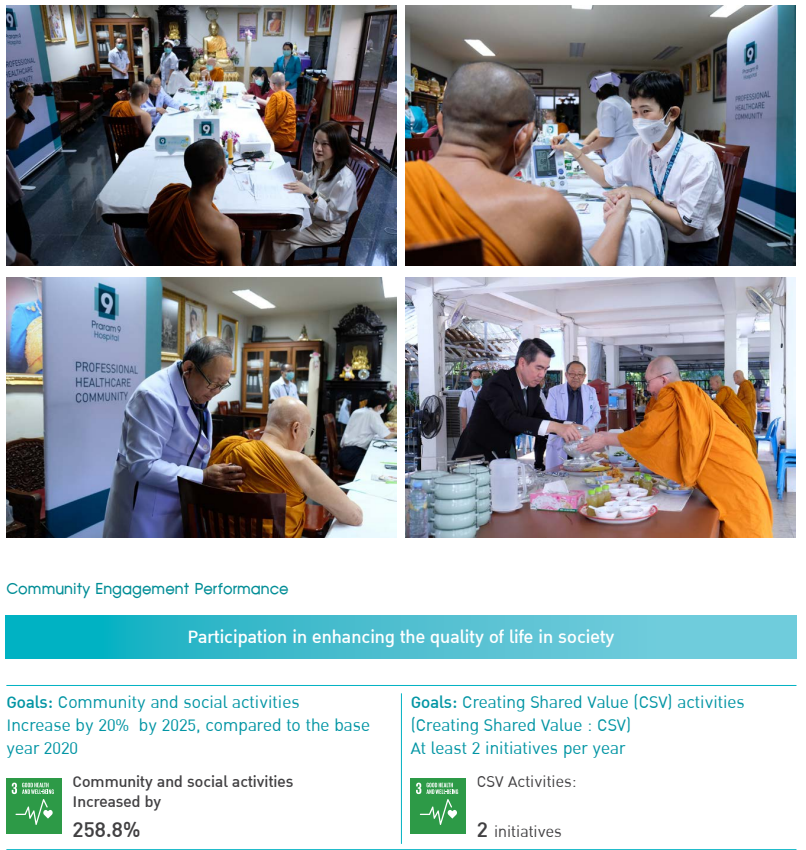
Project "HAPPY MONK: Monks' Well-Being" is a creating shared value (CSV) project by Praram 9 Hospital, aimed at promoting the health of monks in the community, particularly in managing non-communicable diseases (NCDs), which are diseases not caused by infections and cannot be transmitted from person to person, such as obesity, diabetes, high blood cholesterol, hypertension, heart disease, and chronic kidney disease. The main causes are lifestyle habits and improper dietary behaviors.
According to a survey of monks' health, it was found that most monks suffer from diseases not caused by infections. It was found that chronic non-communicable diseases (NCDs) 4 diseases threaten the health of monks and novices, with the most common being diabetes, hypertension, high blood cholesterol, and ischemic heart disease. The main cause is improper dietary habits, as they often consume overly spicy, sweet, and salty foods, as well as sugary drinks. This is a limitation as they cannot choose their meals and must accept the food given during alms rounds, in addition to restrictions on exercise.
Praram 9 Hospital has organized the project "HAPPY MONK: Monks' Well-Being" to conduct health checkups for monks in the community at Wat Rama 9 Kanchanaphisek. A team of specialist doctors, nurses, nutritionists, and relevant staff organized health checkup activities for the monks free of charge and provided nutritional education to ensure that monks consume food correctly.
The objectives of the project HAPPY MONK: Monks' Well-Being
- To promote the good health of monks by conducting health checkups for monks in the community at Wat Rama 9 Kanchanaphisek
- To build good relationships between the Company, the temple, monks, and the community
- To support the health care of monks by providing knowledge and advice on nutrition and the prevention of NCDs (Non-Communicable Diseases) and
- To provide basic health care by offering essential medicines to the temple.
Operations
1. Monks' Health Checkup
- Basic health checkups, such as measuring blood pressure, blood sugar levels, blood cholesterol, etc.
2. Providing Knowledge on Nutrition and NCDs Prevention
- Providing nutritional advice on appropriate foods for monks, such as reducing sweetness, fats, and salt
- Recommending adjustments to eating behaviors based on food received during alms rounds
3. Offering Alms Food and Essential Medicines
- The medical team, nurses, and staff collectively offer alms food to the monks
- Offering essential medicines to the monks
4. Community Engagement Activities
- Inviting the monks to chant Buddhist prayers at Praram 9 Hospital on New Year's Day
Budget
- Allocated Budget: 50,000 Baht
- Actual Expenditure: 16,514.70 Baht
Social Impact Assessment
Key Stakeholders
Beneficiary Groups
- Monks: Received health check-ups and nutritional guidance, helping to reduce the risk of NCDs
- Caregivers and Relatives: Increased confidence in Praram 9 Hospital and strengthened relationships with the Company
- Community: The community has greater trust and acceptance of the Company's role in social care
Positive Impacts
- Health Aspect: Monks received health check-ups and accurate nutritional guidance, preventing NCDs, improving their health, and enhancing their knowledge of self-care
- Social Aspect: Strengthened relationships between the community and Praram 9 Hospital, leading to greater acceptance and support for the Company's activities and the opportunity to expand the service user base.
- Economic Aspect: With a budget of only 16,514.70 Baht, the initiative was able to generate widespread positive impacts.
Negative Impacts (if any) :
- Some monks may not have been able to participate due to time or travel constraints.
- Continuity: Lack of follow-up and continuous guidance after participation in the project.
- Behavioral Impact: Changing dietary habits may be challenging for monks.
Social Return on Investment (SROI)
Calculation: SROI = ( Social Outcome Value - Investment Cost Value) / Investment Cost Value
Social Benefits Received:
Health Aspect:
- 18 monks received health check-ups and nutritional guidance
- Reduced long-term risk of NCDs (further follow-up required).
Social Aspect:
- Strong relationships between the Company, the community, and Wat Rama 9
- Increased confidence of caregivers and relatives in Praram 9 Hospital.
Economic Aspect: Efficient budget utilization
Social Outcomes:
- Value of Health Check-ups: 18,000 Baht : Estimated cost per general health check-up per person at 1,000 Baht
- Value of Reduced Risk of NCDs: 18 monks × 5,000 Baht = 90,000 Baht It is estimated that reducing the risk of NCDs in the long term will help lower future medical expenses, with an estimated average reduction of 5,000 Baht per person.
- Improved Relationships: Estimated value of improved relationships between the Hospital, the community, and the temple.
- Total Social Outcome Value: 18,000 Baht + 90,000 Baht = 108,000 Baht
Investment Budget : 16,514.70 Baht
SROI = ( Social Outcome Value) / (Actual Expenditure) = 18,000 + (18 × 5,000) / 16,514.70 = 6.54
This means: For every 1 Baht invested in this project, it generates a social benefit of 6.54 Baht.
(This SROI calculation is a preliminary estimate, as the value of certain social outcomes is an approximation. Further study and data collection are required to obtain more accurate figures.)
Monitoring and Evaluation
- Efficient Budget Management: Lower expenditure than the allocated budget
Sustainability Strategy Plan
Objectives:
- Promote sustainable health for monks in the community.
- Foster strong relationships between the Company, the community, and the temple.
- Improve the quality of life for monks and the community.
Strategies:
- Encourage Participation: Invite monks and the community to participate in planning and implementing activities.
- Ensure Continuity: Organize follow-up activities and provide continuous guidance.
- Expansion: Extend the project to other temples in the community.
- Network Building: Collaborate with temples and the community to expand the project.
Sustainability Strategy Indicators
- Number of monks receiving health check-ups and nutritional guidance.
- Satisfaction level of the monks and the community
- Changes in dietary behavior
- Reduction in medical expenses
Creating Shared Value (CSV) Activities
- Establish a monastic health network Establish a network between temples, hospitals, and the community to promote monks’ health
- Monastic Nutrition Project: Nutritionists provide guidance and education on healthy diets for monks
- Support Physical Activity: Recommend appropriate exercise activities for monks
The HAPPY MONK "Monks' Well-Being" project is valuable and beneficial to both monks and the community. The assessment of social impact and sustainability investments helps us understand the outcomes and plan future operations effectively.